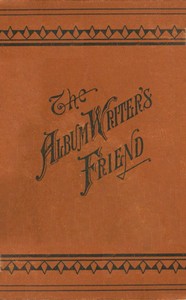
The Album Writer's Friend by J. S. Ogilvie
Let's be clear from the start: 'The Album Writer's Friend' is not a novel. Don't go in expecting a sweeping plot or deep characters. What you get is something far more niche and, in its own way, fascinating. Published in the late 19th century by J.S. Ogilvie & Company, this slim volume presents itself as a practical guide. Its mission? To help the polite society of the era navigate the treacherous social waters of writing in photograph albums.
The Story
There isn't a narrative in the traditional sense. Instead, the book functions as a manual. It provides sample poems, sentimental verses, and elegant phrases intended to be copied next to portraits in family albums. It covers everything from inscriptions for a beloved parent to lines for a respected friend. The 'plot,' such as it is, lies in watching the very specific social etiquette of the Victorian era unfold through these prescribed sentiments. It's a rulebook for public emotion and proper presentation, a glimpse into the performative nature of friendship and memory in a time before casual snapshots.
Why You Should Read It
This is where the book gets interesting. Reading it today feels incredibly intimate and oddly alien at the same time. The overly formal language and dramatic declarations ('O, fatal likeness!') can seem humorous now. But beneath that, you sense the genuine anxiety of the era. What if your inscription wasn't witty or profound enough? This book was a social crutch. For me, the value is entirely in this window into the past. The 'Unknown' authorship adds to its charm—it feels less like a published book and more like a found object, a direct line to the social fears and aspirations of everyday people over a hundred years ago.
Final Verdict
This is a book for a specific kind of reader. Perfect for history lovers, archivists, or anyone fascinated by the quirks of social history. If you enjoy primary sources that show how people actually lived and worried, you'll find this short guide utterly compelling. It's also a great pick for writers looking for authentic period flavor. But if you need a driving story or deep character work, you'll be disappointed. Think of it as a museum exhibit in book form: a small, peculiar, and wonderfully revealing artifact from another world.
This masterpiece is free from copyright limitations. Feel free to use it for personal or commercial purposes.