
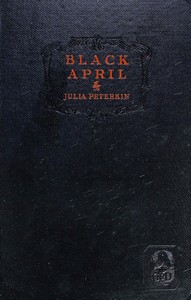
Black April by Julia Peterkin
Julia Peterkin's Black April pulls you into the heart of Blue Brook Plantation, a world most novels of its time ignored. Published in 1927, it doesn't tell a story of the big house. Instead, it plants you firmly in the lives, joys, and struggles of the Gullah people who are the lifeblood of the land.
The Story
This is April's story. He's the foreman, a man of immense strength and respect, who holds his large family and his position with fierce determination. We follow him through the cycles of planting and harvest, through community gatherings and personal trials. The plot isn't a single, dramatic event, but the slow, inevitable pressure of change. April faces challenges from a jealous rival, the heartbreaking choices of the women in his life, and the simple, cruel passage of time that weakens his body. His fight isn't against a villain in the classic sense, but against a fate that seems to be closing in from all sides, threatening the legacy he's built.
Why You Should Read It
You should read it because it feels real. Peterkin, who managed a plantation herself, writes with a startling intimacy. She doesn't romanticize or judge. She shows a community with its own rich culture, humor, sorrows, and strength. April is a towering figure, but also a vulnerable man. His pride is both his armor and his weakness. Reading this, you get a sense of a whole, complete world operating with its own rules and rhythms, one that was largely invisible in mainstream American literature. It's a profound study of a man facing his own decline, and a community navigating its place in a shifting South.
Final Verdict
This book is perfect for readers who love deep character studies and immersive historical fiction. If you enjoyed the community spirit of Zora Neale Hurston's work or the tragic weight of a classic hero's fall, you'll connect with Black April. It's not a fast-paced adventure; it's a slow, powerful current that pulls you under. Be prepared to be moved by its honesty and humbled by its perspective. A true, groundbreaking classic that still resonates today.
This text is dedicated to the public domain. You can copy, modify, and distribute it freely.
Robert Thomas
5 months agoAfter spending a few days with this digital edition, the practical checklists included are a great touch for real-world use. This is a solid reference for both beginners and experts.
Nancy Martin
2 months agoThe methodology used in this work is academically sound.
Christopher Johnson
4 months agoOne of the most comprehensive guides I've read this year.
Donald Jackson
1 year agoThe information is current and very relevant to today's needs.





Elizabeth White
10 months agoIt took me a while to process the complex ideas here, but the way it challenges the status quo is both daring and well-supported. This has become my go-to guide for this specific topic.