
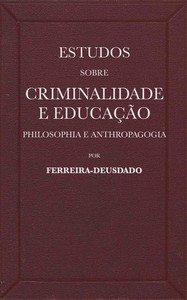
Estudos sobre criminalidade e educação (philosophia e anthropagogia)
Let's set the scene: Portugal, late 1800s. Crime is a growing problem, and the usual answers are more police, harsher prisons. Then along comes Ferreira-Deusdado, a medical doctor with a philosopher's mind, who says, 'Hold on. We're treating the symptom, not the disease.'
The Story
There isn't a traditional plot with characters. Instead, the 'story' is the journey of Ferreira-Deusdado's argument. He starts by picking apart the popular beliefs of his day about criminals being a separate, inferior class of people. Using his medical background, he argues that environment, poverty, and a complete lack of moral and practical education are what push people into crime. The real heart of the book is his proposal for 'anthropagogia'—a whole system of education designed not just to inform, but to form. He imagines schools that teach ethics, civic duty, and practical skills, creating citizens who contribute to society instead of harming it. It's a detailed, hopeful, and ambitious plan for social reform written from the ground up.
Why You Should Read It
Reading this is like having a conversation with a brilliant, slightly ahead-of-his-time thinker. You can feel his frustration with the status quo and his genuine hope for a better system. What struck me most was how modern some of his concerns feel. The debate between punishment and prevention, the role of schools in society, the link between poverty and crime—these aren't 19th-century problems; they're our problems. While some of the science and social views are clearly dated, the core question remains powerful. It makes you think: how much of our current approach is still based on old, unexamined ideas?
Final Verdict
This isn't a light weekend read. It's for the curious reader who loves history, sociology, or big ideas. It's perfect for anyone interested in the roots of criminal justice reform, the history of educational theory, or just seeing how people in the past tried to solve the same tough social issues we face today. You'll need a little patience for the older writing style, but the insight you get is worth it. Think of it as a fascinating piece of intellectual archaeology that just might change how you see the news.
This historical work is free of copyright protections. You are welcome to share this with anyone.
George Smith
8 months agoI've been looking for a reliable source on this topic, and the bibliography and references suggest a high level of research and authority. Top-tier content that deserves more recognition.
Susan Martin
9 months agoFinally found a version that is easy on the eyes.
Michael Garcia
7 months agoLooking at the bibliography alone, the data points used to support the main thesis are quite robust. I'm genuinely impressed by the quality of this digital edition.
Mary Davis
4 months agoUnlike many other resources I've purchased before, the narrative arc keeps the reader engaged while delivering factual content. I'm glad I chose this over the other alternatives.









James Wilson
4 months agoVery satisfied with the depth of this material.