
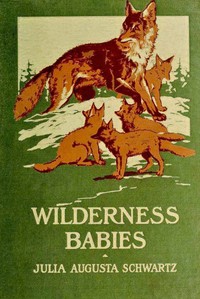
Wilderness Babies by Julia Augusta Schwartz
Originally published in 1915, Julia Augusta Schwartz's Wilderness Babies is a collection of short, nature-focused stories that read like intimate portraits. Schwartz doesn't craft a single, continuous plot with human characters. Instead, she turns her keen observer's eye on the animal kingdom, giving us a season-by-season glimpse into the lives of North American wildlife in their youth.
The Story
The book is structured around the challenges of growing up wild. Each chapter introduces us to a new baby animal—a fox kit, a young otter, a bobcat kitten, a fledgling eagle. Schwartz follows them through a critical moment or a typical day. We see a bear cub's frustrating first attempts to catch a trout, a moose calf's bewildering migration with its herd, and a litter of rabbits learning the meaning of stillness when danger is near. There's no talking animals or magical adventures here. The drama comes from real survival: finding food, escaping predators, and learning the essential skills passed down from their parents. The narrative moves with the turning of the year, showing how different species adapt to spring's abundance, summer's heat, autumn's preparation, and winter's harsh test.
Why You Should Read It
What struck me most was Schwartz's balance. She writes with clear affection for her subjects, but she never gets overly sentimental. She respects the reality of the wild—the fact that not every story has a happy ending—while still filling each page with wonder. Her descriptions are sharp and vivid; you can almost feel the chill of the mountain stream or the rough bark of the pine tree. Reading it feels less like reading a book and more like sitting quietly in a forest clearing, watching life unfold. It reawakens a basic curiosity about the natural world that many of us lose as adults. You start seeing the birds in your neighborhood not just as background noise, but as individuals with their own daily dramas.
Final Verdict
This is a perfect, comforting read for nature lovers, fans of gentle, observational writing, or anyone who needs a quiet break from a noisy world. It’s excellent for reading aloud to curious kids (though some scenes might be intense for the very young), and it holds a special appeal for adults who enjoy historical nature writing. Don't go in expecting a fast-paced plot. Go in expecting to be a quiet witness to the first steps, first hunts, and first winters of the wilderness's youngest inhabitants. It's a calming, perspective-shifting little book that has stayed in print for over a century for a very good reason.
This is a copyright-free edition. Distribute this work to help spread literacy.
Elizabeth Flores
1 year agoHonestly, the character development leaves a lasting impact. Absolutely essential reading.
Matthew Taylor
1 year agoWow.
Dorothy Garcia
9 months agoI was skeptical at first, but the storytelling feels authentic and emotionally grounded. Thanks for sharing this review.
Kevin Sanchez
5 months agoHonestly, the arguments are well-supported by credible references. A valuable addition to my collection.




Sarah Martin
2 years agoI decided to give this a try based on a colleague's recommendation, the way it handles controversial points with balance is quite professional. The insights gained here are worth every minute of reading.