
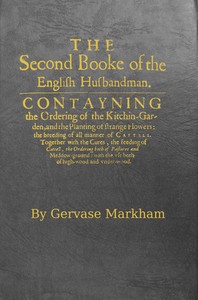
The English Husbandman (The Second Booke) by Gervase Markham
Let's be clear from the start: this isn't a novel. Gervase Markham's The English Husbandman (The Second Booke) is a practical guide, published in 1613. Think of it as the ultimate DIY manual for a 17th-century small farmer. Markham covers everything. I mean everything.
The Story
There's no traditional plot, but there is a powerful narrative thread: the struggle to create and maintain a secure life from the land. The 'story' is the annual cycle of work. Markham walks you through managing meadows, planting hops for beer, caring for orchards, and raising livestock. He gives specific, often repetitive, instructions on tasks like ditching, hedging, and curing animal diseases. The drama is in the stakes. A poorly managed field or a sick cow isn't just an inconvenience; it's a direct threat to your family's survival through the winter. You feel the weight of that responsibility on every page.
Why You Should Read It
You should read it because it's a time machine. History books tell you about events and social structures. This book shows you the texture of daily life. Markham's voice is wonderfully direct—sometimes fussy, always earnest. He's not writing for scholars; he's writing for his 'Countryman,' trying to pass on hard-won knowledge. You get incredible details, like how to tell if soil is good by its taste (seriously!), or the precise method for planting a quickset hedge. It connects you to a mindset where knowledge was physical, local, and essential. It makes you appreciate the sheer amount of expertise required to simply exist.
Final Verdict
This book is perfect for history buffs who want to move beyond politics and wars, for gardeners or homesteaders curious about pre-industrial techniques, and for anyone who loves primary sources. It's not a cover-to-cover read for most; it's a book to dip into. Open it to a random page and you'll find a gem—a recipe for cider, a remedy for a horse's cough, or a rant about lazy laborers. It's a captivating, humbling look at the foundational skills of society, written with the urgent passion of a man who believed this knowledge was the difference between prosperity and ruin.
This work has been identified as being free of known copyright restrictions. Preserving history for future generations.
Paul Garcia
1 month agoInitially, I was looking for a specific answer, but the chapter on advanced strategies offers insights I haven't seen elsewhere. I feel much more confident in my knowledge after finishing this.
Michael Williams
10 months agoI've gone through the entire material twice now, and the emphasis on ethics and sustainability within the topic is commendable. I am looking forward to the author's next publication.
Matthew Jackson
6 months agoI was skeptical about the depth of this book at first, but the concise summaries at the end of each section are a lifesaver. A solid investment for anyone's personal development.
David Jackson
7 months agoGiven the current trends in this field, the concise summaries at the end of each section are a lifesaver. This should be on the reading list of every serious professional.



Patricia Johnson
10 months agoThe layout of the digital version made it easy to start immediately, the formatting on mobile devices is surprisingly crisp and clear. Finally, a source that prioritizes accuracy over hype.