About 86 minutes
Money-Saving Main Dishes — Reading Notes
Housekeeping
19,608 recorded words. 7 minutes difference from this book's estimate.
View Gutenberg source #65706
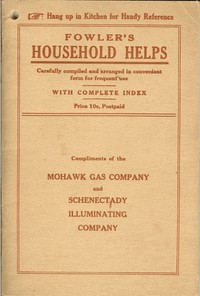
This digital edition of Fowler's Household Helps Over 300 Useful and Valuable Helps About the Home, Carefully Compiled and Arranged in Convenient Form for Frequent Use — Context and Discussion is described by source-level measurements including 21,183 words, 1 hr 33 min estimated reading time, and 4 detected text sections.
The text analysis averages about 22.4 words per sentence, while the detected sections provide another way to judge how the source is divided.
Project Gutenberg metadata also associates the work with “Home economics,” connecting these edition facts with the source record’s subject description.
Explore this collection
These alternatives are selected using recorded categories and estimated reading time.
About 86 minutes
Housekeeping
19,608 recorded words. 7 minutes difference from this book's estimate.
View Gutenberg source #65706About 130 minutes
Housekeeping
29,671 recorded words. 37 minutes difference from this book's estimate.
View Gutenberg source #72624About 200 minutes
Housekeeping
45,806 recorded words. 107 minutes difference from this book's estimate.
View Gutenberg source #73744Search stored excerpts and compare books → Choose by your preferences →
Choices use stored catalog measurements. Estimates vary with reading speed. A shared category is a catalog label, not a claim that two books have the same argument or literary quality.
Search reads excerpt text stored with this catalog and links to its associated Gutenberg record. The connection is stored in the site database; this tool does not recheck that every excerpt is word-for-word identical to that external record. Excerpt search does not cover every chapter and does not verify historical publication dates.
Catalog snapshot checked: 2026-09-26. Coverage: 91 public books, 91 available source excerpts.
Calculated from edition completeness, EPUB availability, text structure and catalogue metadata. Not a user rating.
Total of 100 points, scaled to a 2.5-5.0 range. Editions with an empty description or a missing EPUB file are not scored.
Public-domain source text
The source text is kept in the dedicated reader, separate from this catalogue record and its commentary.
The opening pages of Fowler's Household Helps immediately establish a practical, no-nonsense tone. The dedication addresses “efficient and up-to-date housekeepers,” and the author explicitly disclaims guarantee while asserting the tips are “carefully compiled from reliable sources.” The first substantive section, “The Care and Use of Gas Appliances,” dives into specifics: cleaning burner holes with a hairpin, oiling the range with olive oil to prevent rust, and leaving oven doors open after use. This granular detail sets the expectation that the book values precise, actionable advice over general principles.
The gas range section is the most developed in the excerpts, reflecting early 20th-century shifts toward utility cooking. The author insists that “with reasonable care gas is much cheaper for household cooking than any other fuel,” a claim supported by tips like using a top burner lighter and turning down gas to the minimum required heat. The advice to “plan your cooking so as to use both broiler and oven at once” reveals an underlying concern with fuel efficiency. The repeated warnings against rust—ranges “rust out than wear out”—and the instruction to oil the range while warm show a hands-on, preventive approach. These details suggest the book’s intended reader is someone managing a home with limited resources, where every penny and minute counts.
The laundry section covers a wide array of fabrics and problems, from preventing woolen blankets from shrinking (use curtain stretchers) to restoring shrunken flannels by soaking in gasoline. The advice is often inventive: to make linen glossy, add salt to starch; to bleach a scorched spot, rub with diluted peroxide and iron. The method for stretching lace curtains without a frame—folding double, pinning on a line, and slipping a clean pole inside—demonstrates resourcefulness. The section also includes color-setting methods using alum, salt, vinegar, or sugar of lead, with a cautious note to test a small piece first. These instructions are presented as straightforward recipes, emphasizing reproducibility over explanation of chemistry.
Interspersed among laundry and cooking tips are brief but specific remedies for household nuisances. To get rid of ants, the book recommends smearing cracks with balsam of Peru—a precise, single-ingredient solution. A cheap floor wax recipe combines melted paraffin with turpentine, targeting hardwood floors. These entries are terse, often a single sentence, and lack context or safety warnings, reflecting an era when such substances were common household items. The brevity suggests the book assumes a reader already familiar with basic handling of these materials. The miscellaneous section also includes a tip to avoid burning the hand when ironing by rubbing vaseline on the side of the hand—a small, practical detail that typifies the book’s focus on everyday problems.
The book is organized as a numbered list of “helps,” but the excerpts show no thematic grouping beyond broad categories like “Laundry” or “Miscellaneous.” The index, mentioned on the title page, would be essential for navigation. The author’s disclaimer that he does not “guarantee the reliability” of the helps, yet believes them “efficient if directions are carefully followed,” sets a tone of cautious empiricism. The 1916 copyright and the offer to sell extra copies for 10 cents each suggest a commercial, mass-market publication aimed at housekeepers seeking affordable, condensed advice. The absence of illustrations or diagrams means the reader must rely solely on text, making clarity and precision critical—qualities the excerpts generally deliver.
Readers approaching Fowler's Household Helps should treat it as a reference to be consulted for specific problems rather than read straight through. The index is the key to unlocking its 300-plus entries. Given the age of the advice, some methods—like using gasoline or sugar of lead—may be hazardous by modern standards; readers should exercise caution and verify safety before attempting any remedy. The book’s value lies in its snapshot of early 20th-century domestic ingenuity and its no-frills, solution-oriented approach.
That rainy afternoon, I kept returning to the 1916 manual’s terse advice on stretching butter and patching sheets—economy as quiet dignity. The next page mentioned feeding invalids, and the phrase lingered until I found myself browsing Scientific feeding — Background and Themes. It felt less like a next step, more like the same steady, sensible voice continuing to speak from another shelf.
A brief reflection can help important ideas stay with you longer.