About 57 minutes
Secrets of Making Frozen Desserts at Home: 150 Tested Recipes Easier, More Economical, More Delicious — Reading Companion
Recipes
13,047 recorded words. 3 minutes difference from this book's estimate.
View Gutenberg source #64685
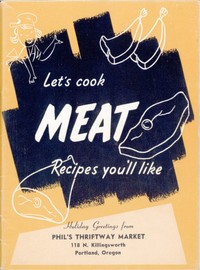
The source record for Let's Cook Meat: Recipes You'll Like — A Reader’s Guide measures this digital text at 12,357 words, 54 min estimated reading time, and 3 detected text sections.
The text analysis averages about 16.3 words per sentence, while the detected sections provide another way to judge how the source is divided.
Project Gutenberg metadata also associates the work with “Cooking (Meat),” connecting these edition facts with the source record’s subject description.
Explore this collection
These alternatives are selected using recorded categories and estimated reading time.
About 57 minutes
Recipes
13,047 recorded words. 3 minutes difference from this book's estimate.
View Gutenberg source #64685About 58 minutes
Recipes
13,131 recorded words. 4 minutes difference from this book's estimate.
View Gutenberg source #24205About 47 minutes
Recipes
10,585 recorded words. 7 minutes difference from this book's estimate.
View Gutenberg source #65379Search stored excerpts and compare books → Choose by your preferences →
Choices use stored catalog measurements. Estimates vary with reading speed. A shared category is a catalog label, not a claim that two books have the same argument or literary quality.
Search reads excerpt text stored with this catalog and links to its associated Gutenberg record. The connection is stored in the site database; this tool does not recheck that every excerpt is word-for-word identical to that external record. Excerpt search does not cover every chapter and does not verify historical publication dates.
Catalog snapshot checked: 2026-09-26. Coverage: 91 public books, 91 available source excerpts.
Calculated from edition completeness, EPUB availability, text structure and catalogue metadata. Not a user rating.
Total of 100 points, scaled to a 2.5-5.0 range. Editions with an empty description or a missing EPUB file are not scored.
Public-domain source text
The source text is kept in the dedicated reader, separate from this catalogue record and its commentary.
The opening pages of Let's Cook Meat immediately establish a practical, no-nonsense tone. The table of contents lists recipes by meat type—Beef, Veal, Pork, Lamb, Sausages, Variety Meats—and includes a section on “Meat Buying and Cooking Helps.” A series of “Meat Cookery Pointers” offers concise tips: salt penetrates only about half an inch, boned roasts need extra cooking time, and low-temperature cooking yields 10 to 30 percent more meat. The first recipe, “Corned Beef and Cabbage,” appears under Beef, and the book’s structure suggests a systematic approach to each cut.
The book’s primary organizational principle is the type of meat, with each section containing a mix of roasts, steaks, chops, stews, and leftovers. For example, the Beef section includes “Standing Ribs of Beef” and “Chinese Pepper Steak with Rice,” while Pork offers “Baked Smoked Ham-Buffet Glaze” and “Pork Chop-Potato Scallop.” Each recipe is paired with a “Menu Idea” listing side dishes and dessert, such as “Lamb Kabobs” served with “Mashed Potatoes” and “Deep Dish Apple Pie.” This structure allows a reader to quickly find recipes for a specific meat and plan a complete meal.
A notable feature is the dedicated “Leftovers” subsection within each meat chapter. For lamb, recipes include “Shepherd’s Pie,” “Lamb Croquettes,” and “Lamb Pie with Catchup Biscuits.” The instructions for “Shepherd’s Pie” combine diced cooked lamb with celery, kidney beans, carrots, and gravy, topped with mashed potatoes. Similarly, the Beef section offers “Leftovers Beef Puff” and “Leftover Treat.” These recipes reflect a mid-century emphasis on thrift and avoiding waste, turning Sunday roast into Monday supper.
The book provides precise cooking methods, often specifying temperatures and times. For “Leg of Lamb—Puffy Mint Pears,” the instructions direct roasting at 300°F for 30 to 35 minutes per pound, with a meat thermometer reading 175°F for medium or 180°F for well-done. The “Time-tables—Meat Cookery” section (pages 35–37) offers a quick reference for roasting, broiling, and braising various cuts. The “Meat Cookery Pointers” also advise browning pot-roasts slowly to retain color, and turning steaks only once during broiling.
While the book is American, several recipes show international flair. “Chinese Pepper Steak with Rice” appears in the Beef section, and “Oriental Lamb Stew” uses curry or chili powder, tomatoes, and olives, served on rice. “Paprika Veal” and “Smoked Tongue Rarebit” suggest European influences. The inclusion of these dishes alongside traditional roasts and chops indicates a broadening of home cooks’ palates in the 1950s, though the core focus remains on familiar meat cuts and straightforward techniques.
Readers approaching Let's Cook Meat should note that the book assumes a working knowledge of basic kitchen skills—it does not explain how to truss a roast or make a roux. The recipes are concise, often listing ingredients without step-by-step elaboration. The timetables and pointers are best used as guidelines rather than strict rules. For a first reading, focus on the introductory pointers and the recipe for a cut you plan to cook; the menus offer a helpful template for balanced meals.
Leafing through Let's Cook Meat tonight, I paused on its careful notes about stretching a roast into tomorrow’s hash. It felt familiar, that quiet thrift, and I remembered another old volume on my shelf, Made-Over Dishes — Story, Setting & Ideas, which turns leftovers into something gentle and new, not desperate. Both speak the same patient language of making do with grace.
Capture what you thought, learned, and would like to remember.