About 35 minutes
Camp fires and camp cooking — A Reader’s Guide
Recipes
7,902 recorded words. 2 minutes difference from this book's estimate.
View Gutenberg source #75442
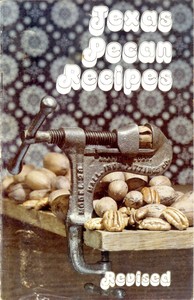
For Texas Pecan Recipes (Revised) — Key Ideas to Explore, the stored edition analysis reports 7,539 words, 33 min estimated reading time, and 11 detected text sections.
The text analysis averages about 9.0 words per sentence, while the detected sections provide another way to judge how the source is divided.
Project Gutenberg metadata also associates the work with “Pecan,” connecting these edition facts with the source record’s subject description.
Explore this collection
These alternatives are selected using recorded categories and estimated reading time.
About 35 minutes
Recipes
7,902 recorded words. 2 minutes difference from this book's estimate.
View Gutenberg source #75442About 37 minutes
Recipes
8,383 recorded words. 4 minutes difference from this book's estimate.
View Gutenberg source #65804About 38 minutes
Recipes
8,672 recorded words. 5 minutes difference from this book's estimate.
View Gutenberg source #24542Search stored excerpts and compare books → Choose by your preferences →
Choices use stored catalog measurements. Estimates vary with reading speed. A shared category is a catalog label, not a claim that two books have the same argument or literary quality.
Search reads excerpt text stored with this catalog and links to its associated Gutenberg record. The connection is stored in the site database; this tool does not recheck that every excerpt is word-for-word identical to that external record. Excerpt search does not cover every chapter and does not verify historical publication dates.
Catalog snapshot checked: 2026-09-26. Coverage: 91 public books, 91 available source excerpts.
Calculated from edition completeness, EPUB availability, text structure and catalogue metadata. Not a user rating.
Total of 100 points, scaled to a 2.5-5.0 range. Editions with an empty description or a missing EPUB file are not scored.
Public-domain source text
The source text is kept in the dedicated reader, separate from this catalogue record and its commentary.
The revised edition of Texas Pecan Recipes opens with a direct address from Commissioner Reagan V. Brown, who frames the collection as a response to a growing trend: 'more and more people are incorporating pecans in many different types of recipes.' This statement, rather than a simple assertion of tradition, positions the booklet as a practical guide for contemporary cooks. The commissioner's voice is authoritative yet conversational, using the inclusive 'we' to align the department with the reader's interests. The introduction also grounds the recipes in a specific regional identity, emphasizing Texas-grown pecans and the state's agricultural heritage.
The booklet's opening pages function as a kind of promotional preface. Commissioner Brown's note—'We hope that you find new ways to use pecans in cooking and that you insist on Texas pecans when you shop'—blends encouragement with a gentle commercial push. The language is deliberately plain, avoiding culinary jargon, which suggests the intended audience is home cooks rather than professional chefs. The historical note that pecans were 'a source of food for the Indians as well as the early colonists' adds a layer of authenticity, but the text quickly pivots to modern convenience: 'modern storage facilities and packaging make them available year-round.' This juxtaposition of past and present is a recurring rhetorical strategy, reinforcing the pecan's enduring value while updating its image.
The recipe instructions exhibit a consistent pattern of concise, imperative verbs: 'Mix,' 'Cream,' 'Sift,' 'Bake.' However, there are notable variations in specificity. For instance, the Pecan Cinnamon Cookies call for 'ground Texas pecans (enough so dough will hold shape the size of a walnut),' a tactile description that relies on the cook's judgment. In contrast, the Coffee Crescents provide exact measurements and a multi-step process involving a honey-coffee glaze. The use of 'Texas pecans' as a repeated ingredient name—rather than simply 'pecans'—reinforces the regional branding. Some recipes, like Santa's Thumbprint, include yield counts ('Yield: 4 dozen'), while others omit them, suggesting an editorial inconsistency that may reflect the booklet's compilation from multiple sources.
The table of contents reveals a deliberate ordering: salads and main dishes precede desserts, candies, and cookies. This structure implies a meal progression, but the inclusion of items like 'Pecan-Cola Salad' and 'Pink Arctic Freeze' hints at mid-century culinary trends. The recipe for 'Texas Beef Nuggets' appears under main dishes, yet its method—combining ground beef with pecans and seasoning—blends snack and entrée categories. The booklet's organization is functional rather than thematic, grouping by course but not by technique or difficulty. Notably, there is no index or cross-referencing, which places the burden on the reader to browse. The final section on storage, placed before the recipes, serves as a practical preface, emphasizing freezer storage and the note that 'pecans do not have to be thawed before being added to a recipe.'
The recipe instructions adopt a neutral, instructional tone, but occasional phrases betray a regional or colloquial flavor. For example, the Pecan Crunch Bars direct the cook to 'Press mixture evenly in greased pan (7 x 11 x 1½ inch),' using the exact pan dimensions rather than a generic 'baking dish.' The Coffee Crescents recipe includes the detail 'Dip the cooled cookies in honey mixture and sprinkle with chopped Texas pecans,' emphasizing the pecan as a finishing touch. The absence of headnotes or personal anecdotes keeps the focus on procedure, yet the repeated insistence on 'Texas pecans' functions as a subtle refrain. This consistency in naming, along with the commissioner's opening appeal, creates a cohesive voice that is both instructional and promotional, reflecting the Department of Agriculture's dual mission of education and marketing.
Readers approaching this booklet should note that its value lies not in narrative or character but in the precise, no-frills instructions and the implicit cultural narrative of Texas pecan promotion. The recipes are best used as standalone references; the introductory material provides context but does not affect the cooking methods. For those interested in the evolution of American regional cookery, the booklet offers a snapshot of early 1980s home cooking trends, from gelatin salads to layered bars. The editorial choices—from the commissioner's framing to the recipe format—reveal a deliberate effort to position the pecan as both a traditional and versatile ingredient.
Flipping through Texas Pecan Recipes, I lingered on its gentle, unhurried introduction, where pecan picking felt less like instruction and more like a remembered autumn afternoon. That quiet practicality lingered, somehow, until I reached for my shelf and pulled down The Country Housewife and Lady's Director in the Management of a House, and the Delights and Profits of a Farm — Edition Insights. Both spoke of kitchen thrift with a calm, almost whispered tenderness. It made me smile how our grandmothers’ voices, though centuries apart, still sound exactly alike.
A brief reflection can help important ideas stay with you longer.