The New Dr. Price Cookbook — Reading Notes
Edition facts
The catalog record for The New Dr. Price Cookbook — Reading Notes provides practical reading context through 30,621 words, 2 hr 14 min estimated reading time, and 9 detected text sections.
The text analysis averages about 17.3 words per sentence, while the detected sections provide another way to judge how the source is divided.
Project Gutenberg metadata also associates the work with “Cooking,” connecting these edition facts with the source record’s subject description.
Calculated from edition completeness, EPUB availability, text structure and catalogue metadata. Not a user rating.
How this score is calculated
- Description quality20 pts
- Title & short description10 pts
- Source metadata20 pts
- Text length15 pts
- Chapters / structure15 pts
- EPUB file integrity20 pts
Total of 100 points, scaled to a 2.5-5.0 range. Editions with an empty description or a missing EPUB file are not scored.
Read the Text
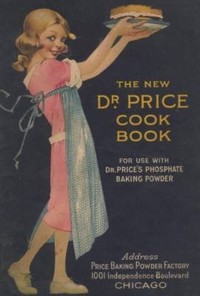
THE NEW DR. PRICE COOK BOOK
FOR USE WITH DR. PRICE'S PHOSPHATE BAKING POWDER
_Address_ PRICE BAKING POWDER FACTORY 1001 Independence Boulevard CHICAGO
_Recipes of Universal Appeal_
In presenting these recipes great care has been exercised to select only those that will be popular in every home, in order that the new Dr. Price Cook Book will be useful every meal every day the year through.
Herein will be found many famous recipes, made more appealing than ever by the use of Dr. Price's Phosphate Baking Powder--recipes that meet present-day conditions by economizing in eggs and other expensive ingredients.
Here also are many new and unusual recipes, easily prepared by the beginner but so excellent that they will add new laurels even to the reputation of the expert, if perfection is maintained by the use of Dr. Price's Phosphate Baking Powder.
Copyright 1921, by Royal Baking Powder Co.
The New Dr. Price Cook Book
Albuminized Orange, 46
Baking Powder Bread, 2
Banana Cake with Jelly Sauce, 23
Beef, Dried with Eggs, 37
Boiling and Stewing, 32
Boston Baked Beans, 38
Boston Brown Bread, 2
Bread Crumb Fritters, 9
Breads, Biscuits and Rolls, 2
Butterscotch Icing and Filling, 18
Butterscotch Layer Cake, 16
Cheese in Scallop Shells or Ramekins, 38
Chicken Croquettes, 37
Chicken Fricassee, 35
Chocolate Blanc Mange, 23
Chocolate Caramels, 44
Chocolate Filling and Icing, 13, 17
Chocolate Ice Cream, 28
Chocolate Layer Cake, 13
Christmas Plum Pudding, 25
Cocoa Cream Candy, 44
Cocoanut Cream Candy, 44
Cocoanut Filling and Icing, 15
Cocoanut Layer Cake, 15
Coffee, French or Drip, 43
Coffee Fruit Cake, 12
Coffee Spice Cake with Mocha Filling, 14
Cookies and Small Cakes, 18-20
Corn Meal Griddle Cakes, 8
Cream Filling, 15, 23, 24
Currant Jelly Meringue, 18
Currant Jelly Sauce, 35
Dumplings, Apple and Peach, 22
Eggless, Milkless, Butterless Cake, 10
Egg Sauce (For Fish), 35
Emergency or Drop Biscuits, 5
Fish, Meat and Vegetable Sauces, 35
French Fried Potatoes, 40
Fritters, Doughnuts and Crullers, 8
Fruit Filling, 15, 17
Griddle Cakes and Waffles, 7, 8
Hickory Nut Candy, 45
Hollandaise Sauce, 36
Horse-Radish Sauce, 36
Huckleberry Float, 24
Icings and Fillings, 16
Invalids, Suggestions for, 46
Kidney Beans with Bacon, 39
Lady Baltimore Cake, 15
Layer Cakes, 14 to 16
Lemon Meringue Pie, 26
Lemon or Orange Sauce, 25
Luncheon and Other Dishes, 38
Macaroni with Cheese, 38
Marshmallow Cookies, 20
Marshmallow Icing, 14, 17
Mocha Icing and Filling, 14
Molasses Cakes, 12, 19
Molasses Candy, Pulled, 44
Mousse, Strawberry, 29
Muffins, Gems, etc., 5
Nut & Potato Croquettes, 38
Nut and Raisin Rolls, 3
Nut or Raisin Bread, 2
Oatmeal Macaroons, 21
Old-Fashioned Chocolate Filling, 17
Old-Fashioned Shortcake, 21
Orange Cream Layer Cake, 14
Ornamental Frosting, 16
Pan Broiling or Frying, 32
Parker House Rolls, 4
Parsnips, Browned, 41
Peanut Butter Bread, 3
Potatoes an Gratin, 40
Potatoes, Stuffed, 40
Pot Roast of Beef with Browned Potatoes, 33
Preserving and Canning, 47
Prune or Date Bread, 3
Puddings and Other Desserts, 22
Raisin Drop Cakes, 18
Rice Griddle Cakes, 8
Rolls, Luncheon or Sandwich, 3
Salads and Salad Dressings, 41
Seven Minute Icing, 17
Soup Stock, Brown, 29
Steamed Fig or Date Pudding, 24
Strawberry Mousse, 29
Strawberry Shortcake, 21
Sweetbreads, Creamed, 33
Sweet Potatoes, Candied, 41
Three-Egg Angel Cake, 11
Time Table, Canning, 47
Time Table, Vegetables, 39
Whole Wheat Hot Cakes, 8
Whole Wheat Raisin Biscuits, 5
Where shortening is mentioned in the recipes it is understood that butter or lard, or an equivalent quantity of butter substitute or vegetable oil may be used.
All measurements for all materials called for in the recipes in this book are level.
The standard measuring cup holds one-half pint and is divided into fourths and thirds.
To make level measurements fill cup or spoon and scrape off excess with back of knife.
One-half spoon is measured lengthwise of spoon.
Sift flour before measuring.
Much depends upon the baking. Many a cake otherwise perfectly prepared is spoiled because the oven is too hot or not hot enough. Regulate the oven carefully before mixing the ingredients.
When a cake is thoroughly baked it shrinks from the sides of the pan. A light touch with the finger which leaves no mark is another indication that the cake is baked.
TABLE OF EQUIVALENT WEIGHTS AND MEASURES
1 saltspoon = 1/4 teaspoon 3 teaspoons = 1 tablespoon 16 tablespoons = 1 cup 2 cups = 1 pint 2 pints = 1 quart 4 cups = 1 quart 2 cups granulated sugar = 1 pound 4 cups flour = 1 pound 2 cups butter = 1 pound 2 tablespoons butter = 1 ounce 2 tablespoons liquid = 1 ounce 4 tablespoons flour = 1 ounce 1 square unsweetened chocolate = 1 ounce 3-1/2 tablespoons cocoa = 1 ounce
BREADS, BISCUITS AND ROLLS
Dr. Price's Baking Powder may be used instead of yeast to leaven bread. It does precisely the same work; that is, raises the dough, making it porous and spongy. The great advantage of bread made by this method is in time saved, as it can be mixed and baked in less than two hours. Milk bread needs little or no shortening, and less flour is required than when water is used. Sift flour before measuring, and use level measurements for all materials.
4 cups flour 1 teaspoon salt 1 tablespoon sugar 7 teaspoons Dr. Price's Baking Powder 1 medium-sized, cold, boiled potato Milk (water may be used)
The New Dr. Price Cookbook, issued by the Royal Baking Powder Company, is as much a promotional vehicle as a collection of recipes. Its language consistently reinforces the brand: the introduction promises recipes "made more appealing than ever by the use of Dr. Price's Phosphate Baking Powder," and the index lists the product by its full name. The cookbook's structure—beginning with general directions and a table of equivalent weights and measures—suggests an audience of home cooks who value precision, yet the text often shifts into persuasive mode, urging readers to maintain "perfection" through the company's powder.
Promotional Diction and Brand Integration
The cookbook's prefatory material frames every recipe as an opportunity to showcase Dr. Price's Baking Powder. The phrase "if perfection is maintained by the use of Dr. Price's Phosphate Baking Powder" appears in the opening appeal, tying successful outcomes directly to the product. Even the index lists the powder by its full name in recipe titles, such as "Strawberry Pie" calling for "2 teaspoons Dr. Price's Baking Powder." This repetition embeds the brand into the reader's mental checklist for baking. The language of "economizing in eggs and other expensive ingredients" also reflects a post-WWI context, where thrift was a selling point, but the solution is always the advertised powder.
Precision in Measurements and Technique
The cookbook's instructions reveal a careful attention to measurement and method. The "Baking Table of Equivalent Weights and Measures" at the start standardizes quantities, and recipes specify exact cupfuls, spoonfuls, and temperatures. For instance, the Lemon Meringue Pie recipe directs the cook to "mix cornstarch, flour and sugar with ½ cup cold water until smooth" and then "add slowly to boiling water. Cook 5 minutes, stirring constantly." Such detail suggests an expectation that the reader will follow steps precisely. The Pumpkin Pie recipe even instructs to "beat 2 minutes" after mixing, a specific timing that implies the need for aeration. These choices reflect an authorial assumption that baking is a science requiring exact replication.
Recipe Structure and Implied Expertise
Recipes are organized with a clear hierarchy: ingredients listed first, then step-by-step instructions. However, the level of assumed knowledge varies. Some entries, like "Mince Pie," simply state "Mince Pie should always be made with two crusts. Line pie plate with pastry... fill with mince meat, cover with pastry and bake in hot oven 25 minutes." This brevity assumes the cook already knows how to make pastry and mincemeat. In contrast, the Strawberry Pie recipe provides a detailed method for a glazed crust, including a syrup that is "boiling hot" and instructions to "brush edges after baking with boiling hot syrup." The variation suggests the cookbook targets a range of skill levels, from novice to experienced.
Dialogue with the Reader Through Imperatives and Asides
The authorial voice frequently uses direct imperatives: "Mix," "Beat," "Pour," "Bake." This creates a commanding yet instructional tone. Occasional asides, such as "If glazed crust is desired" in the Strawberry Pie recipe, offer optional refinements, acknowledging that the cook may choose to embellish. The Custard Pie recipe includes a note that "Cocoanut pie is made the same way, adding one cup fresh grated cocoanut and using only two eggs," showing a pattern of variation within a base method. These small interpolations give the text a conversational quality, as if an experienced baker is sharing tips. The consistent use of "Dr. Price's Baking Powder" in ingredient lists, however, reminds the reader that this dialogue is also a sales pitch.
Readers approaching this cookbook should note its dual purpose: it is both a practical guide and a brand advertisement. The authorial choices—from the insistent repetition of the product name to the precise measurements and varied recipe complexity—reveal a careful construction aimed at building trust and loyalty. By attending to these linguistic and structural details, one can appreciate how early 20th-century food marketing shaped domestic instruction.
There’s something tender in how an old cookbook whispers its era—the careful measurements, the quiet pride in a brand’s name. It reminded me of another curious little volume, Standard Paper-Bag Cookery — Edition Insights, which lingers the same way. I kept thinking about those tidy instructions, how they hold a moment still.

There are no reviews for this eBook.
What was your reading experience?
Capture what you thought, learned, and would like to remember.