About 134 minutes
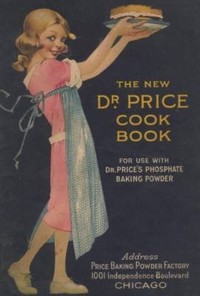
The New Dr. Price Cookbook — Reading Notes
Historical Cookbooks
30,621 recorded words. 3 minutes difference from this book's estimate.
View Gutenberg source #13669
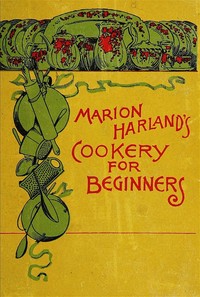
The source record for Marion Harland's Cookery for Beginners A Series of Familiar Lessons for Young Housekeepers — Themes and Context measures this digital text at 30,059 words, 2 hr 11 min estimated reading time, and 5 detected text sections.
The text analysis averages about 16.2 words per sentence, while the detected sections provide another way to judge how the source is divided.
Project Gutenberg metadata also associates the work with “Cooking, American,” connecting these edition facts with the source record’s subject description.
Explore this collection
These alternatives are selected using recorded categories and estimated reading time.
About 134 minutes
Historical Cookbooks
30,621 recorded words. 3 minutes difference from this book's estimate.
View Gutenberg source #13669About 142 minutes
Historical Cookbooks
32,553 recorded words. 11 minutes difference from this book's estimate.
View Gutenberg source #67482About 145 minutes
Historical Cookbooks
33,236 recorded words. 14 minutes difference from this book's estimate.
View Gutenberg source #48695Search stored excerpts and compare books → Choose by your preferences →
Choices use stored catalog measurements. Estimates vary with reading speed. A shared category is a catalog label, not a claim that two books have the same argument or literary quality.
Search reads excerpt text stored with this catalog and links to its associated Gutenberg record. The connection is stored in the site database; this tool does not recheck that every excerpt is word-for-word identical to that external record. Excerpt search does not cover every chapter and does not verify historical publication dates.
Catalog snapshot checked: 2026-09-26. Coverage: 91 public books, 91 available source excerpts.
Calculated from edition completeness, EPUB availability, text structure and catalogue metadata. Not a user rating.
Total of 100 points, scaled to a 2.5-5.0 range. Editions with an empty description or a missing EPUB file are not scored.
Public-domain source text
The source text is kept in the dedicated reader, separate from this catalogue record and its commentary.
Marion Harland's Cookery for Beginners opens not with a recipe but with a question: 'What is the most important branch of culinary knowledge?' The answer—'the ability to make good bread'—establishes a hierarchy that governs the book's structure. The first lesson, 'Home-made Yeast and the first Loaf,' treats yeast as the foundation of all baking, a recurring motif that reappears in later bread chapters. Harland's voice is direct and pedagogical, addressing 'my friends in council' and insisting on precise language: she rejects 'healthy bread' in favor of 'healthful' or 'wholesome,' a small but telling detail that reveals her attention to accuracy.
The table of contents reveals a deliberate progression. The first four chapters center on breads—yeast, sponge, breakfast breads—before moving to eggs, meats, and vegetables. This sequence mirrors the logic of a beginner's kitchen: master the staple, then branch out. Chapter 8, 'What to do with Left-overs,' is a practical pivot, turning waste into resource. The final chapters on desserts and 'fancy Dishes for Tea and Luncheon' suggest a social ambition, moving from daily necessity to entertaining. The structure itself teaches: start with fundamentals, then expand repertoire.
Potatoes appear repeatedly, each time with a different treatment. In the bread chapter, they are boiled for yeast. Later, they are boiled, mashed, and soaked—'old potatoes should be left in the water for several hours.' The instructions for mashed potatoes are almost ritualistic: 'break and whip them into powder with a four-tined fork, or a split spoon.' This attention to a single vegetable across multiple contexts underscores Harland's method: she teaches technique through repetition, varying the application. The potato becomes a touchstone for kitchen skill.
Harland's recipes are choreographed. In 'Boiled Potatoes,' the cook moves from sink to stove to sink again: 'Turn off the water by tipping the pot over on its side in the sink, holding the top on with a thick cloth.' The scene shifts to the range for drying, then to the table for serving. Similarly, 'Scalloped Tomatoes' layers ingredients in a dish, then moves from covered baking to uncovered browning. These micro-movements—from boiling to draining, from covered to uncovered—create a rhythm that guides the beginner through each stage, emphasizing timing and observation.
Harland writes as if speaking to a novice seated beside her. She uses second-person address ('you'), rhetorical questions, and asides: 'I say this that none may be discouraged.' This voice unifies the book, making each lesson feel like a continuation of the same conversation. It also allows her to insert opinion—'the most careful philologists do not speak of edibles as subject to such diseases'—without breaking the instructional flow. The voice is a structural element, turning a collection of recipes into a coherent, reassuring narrative of domestic education.
Harland's Cookery for Beginners is best approached as a course of study, not a reference. Reading the chapters in order reveals the logic of her method: each lesson builds on the last, and recurring ingredients like potatoes and tomatoes become case studies in technique. The book rewards attention to its small movements—from pot to plate, from raw to cooked—and to the voice that guides them. For the modern reader, it offers a window into the domestic pedagogy of the late nineteenth century.
Years at the desk have taught me that Cookery for Beginners whispers its lessons slowly, like a patient aunt. Its quiet confidence sits well next to the grander promises of The Gastronomic Regenerator: A Simplified and Entirely New System of Cookery With Nearly Two Thousand Practical Receipts Suited to the Income of All Classes — Edition Insights, yet both trust the same steady hand in the kitchen.
Use these questions to collect your thoughts before moving on.