About 45 minutes
Collectors' Items: Fifty Superb Recipes from Spice Islands — Reading Companion
Recipes
10,170 recorded words. 2 minutes difference from this book's estimate.
View Gutenberg source #62345
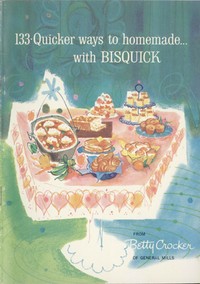
133 Quicker Ways to Homemade, with Bisquick — Text and Context can be approached with a clearer sense of reading commitment from its source measurements: 9,710 words, 43 min estimated reading time, and 2 detected text sections.
The text analysis averages about 10.0 words per sentence, while the detected sections provide another way to judge how the source is divided.
Project Gutenberg metadata also associates the work with “Cooking, American,” connecting these edition facts with the source record’s subject description.
Explore this collection
These alternatives are selected using recorded categories and estimated reading time.
About 45 minutes
Recipes
10,170 recorded words. 2 minutes difference from this book's estimate.
View Gutenberg source #62345About 47 minutes
Recipes
10,585 recorded words. 4 minutes difference from this book's estimate.
View Gutenberg source #65379About 38 minutes
Recipes
8,672 recorded words. 5 minutes difference from this book's estimate.
View Gutenberg source #24542Search stored excerpts and compare books → Choose by your preferences →
Choices use stored catalog measurements. Estimates vary with reading speed. A shared category is a catalog label, not a claim that two books have the same argument or literary quality.
Search reads excerpt text stored with this catalog and links to its associated Gutenberg record. The connection is stored in the site database; this tool does not recheck that every excerpt is word-for-word identical to that external record. Excerpt search does not cover every chapter and does not verify historical publication dates.
Catalog snapshot checked: 2026-09-26. Coverage: 91 public books, 91 available source excerpts.
Calculated from edition completeness, EPUB availability, text structure and catalogue metadata. Not a user rating.
Total of 100 points, scaled to a 2.5-5.0 range. Editions with an empty description or a missing EPUB file are not scored.
Public-domain source text
The source text is kept in the dedicated reader, separate from this catalogue record and its commentary.
The 1959 edition of 133 Quicker Ways to Homemade, with Bisquick opens with a dedication that frames convenience as a gift of time for family cooking. Betty Crocker’s voice is direct and encouraging: “You can cook with love and enjoy the cooking more, when you use this cook book and your Bisquick.” The book’s structure moves from fundamental techniques—biscuit-making with precise oven temperatures and kneading counts—to increasingly elaborate variations and yeast baking. This progression creates a clear instructional arc, but the pacing shifts noticeably between sections, from brisk, imperative instructions to more relaxed, descriptive passages.
The opening biscuit recipe establishes a tone of exactitude. Instructions are given as commands: “Heat oven to 450° (hot). Add ⅔ cup milk all at once to 2 cups Bisquick. Stir with fork into a soft dough. Beat dough vigorously 20 strokes.” The number of strokes is specified, and the dough’s consistency is defined as “stiff and slightly sticky.” Kneading is limited to “8 to 10 times,” and the cutter is dipped in Bisquick to prevent sticking. This level of detail suggests an audience unfamiliar with baking, yet the voice remains confident, not condescending. The “Dress up your biscuits 10 ways” list follows a consistent pattern: each variation names an ingredient, gives a quantity, and pairs it with a suggested serving. For example, “Bacon: ⅓ cup crisply cooked diced bacon” paired with “grapefruit, scrambled eggs.” The structure is uniform, making the variations easy to scan and compare.
As the book moves into main dishes, muffins, and coffee cakes, the instructions become more flexible. The Velvet Crumb Cake recipe, for instance, offers multiple variations—upside-down cake, orange-nut, fudge, spice, and shortcake—each introduced with the phrase “Make Velvet Crumb Cake (recipe page 20)—except…” This formulaic approach allows for quick adaptation without repeating the base method. The language shifts from imperative to conditional: “Serve warm with whipped cream” or “Serve warm with a topping.” The yeast baking section introduces a different pacing, with numbered steps and a note on water temperature: “Water temperature for dissolving yeast is right when it is slightly warmer than lukewarm. Too hot water kills the yeast; too cool water retards rising.” This explanatory aside contrasts with the earlier brisk commands, offering a brief moment of theory before returning to procedure.
The yeast roll recipe includes a rising step that takes “about 1 hr,” a significant pause compared to the 10–15 minute bake times of biscuits. The instructions for shaping rolls—crescents, clothespin rolls, knots—are detailed but assume some manual dexterity. The pizza recipe that follows is notably different in tone: it lists ingredients in a bullet-like format and includes the note “No rising!” The baking temperature is 425° (hot), and the instructions end with “Serve immediately. Unbaked pizza may stand while others are baking.” This practical tip acknowledges real-world kitchen logistics. The voice here is less prescriptive and more accommodating, suggesting a shift from teaching basics to enabling creativity. The overall pacing of the book accelerates through the first sections, then slows with yeast baking, and finally relaxes into the pizza variations, which offer flexibility in portion size and topping assembly.
Readers will notice that the book’s instructional voice is consistent but not static; it adapts to the complexity of the recipe. The early sections demand precision, while later ones allow for interpretation. Pay attention to the small details—the number of strokes, the temperature notes, the serving suggestions—as they reveal the assumed skill level of the cook. This cookbook is best used as a sequential guide, but experienced bakers may skip ahead to the variations and yeast recipes for more ambitious projects.
I remember my mother’s worn Bisquick box, the same hurried rhythm of “quick” and “homemade” that this cookbook hums. Flipping its pages now, I felt that old contradiction again—the same one I had with Let's Cook Meat: Recipes You'll Like — A Reader’s Guide, where convenience somehow promised warmth. Both books whispered that a short cut could still taste like love. That’s a gentle lie I still hold.
Create a short personal record of your experience with this book.