About 123 minutes
First lessons in the principles of cooking — Reading Companion
Home Economics
28,243 recorded words. 11 minutes difference from this book's estimate.
View Gutenberg source #75832
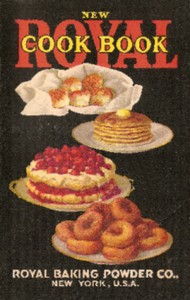
This digital edition of New Royal Cook Book — Text and Context is described by source-level measurements including 30,734 words, 2 hr 14 min estimated reading time, and 5 detected text sections.
The text analysis averages about 18.8 words per sentence, while the detected sections provide another way to judge how the source is divided.
Project Gutenberg metadata also associates the work with “Pastry,” connecting these edition facts with the source record’s subject description.
Explore this collection
These alternatives are selected using recorded categories and estimated reading time.
About 123 minutes
Home Economics
28,243 recorded words. 11 minutes difference from this book's estimate.
View Gutenberg source #75832About 115 minutes
Home Economics
26,339 recorded words. 19 minutes difference from this book's estimate.
View Gutenberg source #10632About 153 minutes
Home Economics
34,999 recorded words. 19 minutes difference from this book's estimate.
View Gutenberg source #28419Search stored excerpts and compare books → Choose by your preferences →
Choices use stored catalog measurements. Estimates vary with reading speed. A shared category is a catalog label, not a claim that two books have the same argument or literary quality.
Search reads excerpt text stored with this catalog and links to its associated Gutenberg record. The connection is stored in the site database; this tool does not recheck that every excerpt is word-for-word identical to that external record. Excerpt search does not cover every chapter and does not verify historical publication dates.
Catalog snapshot checked: 2026-09-26. Coverage: 91 public books, 91 available source excerpts.
Calculated from edition completeness, EPUB availability, text structure and catalogue metadata. Not a user rating.
Total of 100 points, scaled to a 2.5-5.0 range. Editions with an empty description or a missing EPUB file are not scored.
Public-domain source text
The source text is kept in the dedicated reader, separate from this catalogue record and its commentary.
The New Royal Cook Book (1920) presents itself as a methodical guide, with recipes arranged in a consistent pattern: ingredient lists followed by step-by-step instructions. The book’s structure reflects an industrial-era confidence in standardization, as seen in the repeated phrase “Sift dry ingredients together” and the careful specification of oven temperatures and timings. The index, spanning from “Albuminized Orange” to “Zwieback,” suggests a comprehensive scope, yet the excerpts show a particular focus on baked goods—cakes, pies, biscuits—where Royal Baking Powder is the recommended leavening agent.
Throughout the excerpts, the phrase “Sift dry ingredients together” appears in multiple recipes, from biscuits to pie crusts, establishing a rhythmic opening. The book consistently promotes Royal Baking Powder as the sole leavening agent, warning against substitutes like sour milk and soda. For instance, the introductory text states that “Royal Baking Powder is used in all recipes in which a leavening agent is required,” and later recipes reinforce this by listing it among dry ingredients. This repetition creates a structural motif: the cook is guided to rely on a single, dependable product, eliminating guesswork. The recipes for “Biscuits and Muffins” (pages 6-7) and “Cakes” (pages 10-16) exemplify this pattern, with each step building on the previous one.
The book’s structure moves from listing ingredients to detailing technique, often with precise measurements and timings. For example, the “Strawberry Pie” recipe begins with a list of crust ingredients, then instructs to “Roll out on floured board and use for bottom crust of pie,” followed by baking times. The “Mince Meat” recipe similarly lists 13 ingredients before mixing and packing. This sequential movement reflects a pedagogical approach: the cook first assembles components, then executes steps. The “Frozen Desserts” section introduces a new movement—from preparation to freezing—with instructions to “Scald can, cover and dasher, adjust can in freezer.” Such shifts in setting, from kitchen to ice cream freezer, underscore the book’s comprehensive scope.
Many recipes include variations, creating a branching structure. For instance, “Custard Pie” is followed by “Cocoanut Pie is made the same way, adding 1 cup fresh grated cocoanut, and using only 2 eggs.” Similarly, “Berry Pies” notes that “Other fruit pies can be made in the same way,” and “Cherry Tarts” suggests “Other fruit can be used in place of cherries.” These asides function as structural nodes, allowing the cook to adapt recipes without repeating full instructions. The book also includes cross-references, such as “Line pie plate with paste, page 26,” directing the reader to the pastry recipe. This network of references and variations creates a modular structure, enabling customization while maintaining consistency.
The book’s language evokes a domestic setting, with phrases like “rub in shortening very lightly with finger tips” and “dot with small pieces of butter” conjuring tactile imagery. The “Mince Meat” recipe, with its list of spices and alcohol, suggests a pantry stocked with sherry and brandy. The “Pumpkin Pie” instructions to “beat 2 minutes” imply a manual effort, while the “Chocolate Ice Cream” recipe (page 28) hints at a household with an ice cream freezer. These details, though brief, paint a picture of the early 20th-century American kitchen—a place of measured labor and reliance on branded products. The recurring image of “hot oven” and “moderate oven” further anchors the recipes in a specific technological context.
Readers approaching the New Royal Cook Book will find a structured guide that rewards attention to its recurring patterns. The book’s emphasis on a single leavening agent and its systematic layout reflect a desire for reliability in home baking. By noting the movement from ingredient lists to technique, and the variations that allow for adaptation, one can use this book as both a reference and a template for experimentation.
This book’s careful steps for perfect bread made me think of my grandmother’s penciled notes in her own copy, each one a quiet conversation with the page. Miss Parloa's New Cook Book — Reading Companion once gave me that same feeling—a recipe as a letter from the past, not a command, just someone’s steady hand showing the way. It’s a comfort, that.
Your answers remain private and are stored only in this browser.