About 32 minutes
Faster Ways to Favorite Dishes With the New Minute Tapioca — Reading Notes
Historical Cookbooks
7,258 recorded words. 5 minutes difference from this book's estimate.
View Gutenberg source #65502
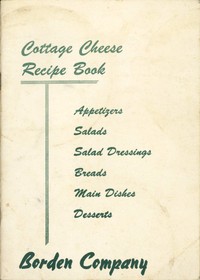
Cottage Cheese Recipe Book Appetizers, Salads, Salad Dressings, Breads, Main Dishes, Desserts — Text and Context can be approached with a clearer sense of reading commitment from its source measurements: 8,337 words, 37 min estimated reading time, and 2 detected text sections.
The text analysis averages about 15.4 words per sentence, while the detected sections provide another way to judge how the source is divided.
Project Gutenberg metadata also associates the work with “Cookbooks,” connecting these edition facts with the source record’s subject description.
Explore this collection
These alternatives are selected using recorded categories and estimated reading time.
About 32 minutes
Historical Cookbooks
7,258 recorded words. 5 minutes difference from this book's estimate.
View Gutenberg source #65502About 31 minutes
Historical Cookbooks
6,996 recorded words. 6 minutes difference from this book's estimate.
View Gutenberg source #70259About 30 minutes
Historical Cookbooks
6,722 recorded words. 7 minutes difference from this book's estimate.
View Gutenberg source #65562Search stored excerpts and compare books → Choose by your preferences →
Choices use stored catalog measurements. Estimates vary with reading speed. A shared category is a catalog label, not a claim that two books have the same argument or literary quality.
Search reads excerpt text stored with this catalog and links to its associated Gutenberg record. The connection is stored in the site database; this tool does not recheck that every excerpt is word-for-word identical to that external record. Excerpt search does not cover every chapter and does not verify historical publication dates.
Catalog snapshot checked: 2026-09-26. Coverage: 91 public books, 91 available source excerpts.
Calculated from edition completeness, EPUB availability, text structure and catalogue metadata. Not a user rating.
Total of 100 points, scaled to a 2.5-5.0 range. Editions with an empty description or a missing EPUB file are not scored.
Public-domain source text
The source text is kept in the dedicated reader, separate from this catalogue record and its commentary.
The Cottage Cheese Recipe Book, issued by the Milk Industry Foundation and the Borden Company, is a promotional cookbook that treats cottage cheese not merely as an ingredient but as a solution to mid-century nutritional and economic concerns. Its opening pages present a chart of the milk distributor’s dollar, breaking down costs for raw milk, containers, and advertising, before any recipe appears. This juxtaposition of household economy with corporate accounting sets a distinctive tone: the cookbook is as much about thrift and efficiency as about taste.
The book’s prefatory matter frames cottage cheese through a series of declarative, almost clinical statements: “One pound of cottage cheese contains most of the protein, calcium, phosphorous, iron, and vitamins found in three quarts of milk.” The language is precise and quantitative, emphasizing percentages and caloric counts (“One ounce of creamed cottage cheese supplies about 30 calories”). This nutritional rhetoric is paired with an economic argument: the chart “What Becomes of the Milk Distributor’s Dollar” itemizes costs down to fractions of a cent, suggesting that the cookbook’s audience is expected to value both bodily and financial efficiency. The recipe instructions themselves adopt a brisk, imperative voice—“Mix, spread, roll, fasten”—that mirrors the no-nonsense tone of the nutritional claims.
Each recipe follows a consistent template: a list of ingredients with precise measurements, then a short paragraph of instructions. The steps are terse and assume a baseline of kitchen competence. For instance, “Drain excess moisture from cottage cheese and force through fine sieve” appears without elaboration on how to drain or what constitutes a fine sieve. The cookbook rarely explains techniques like folding or creaming; it simply directs. This brevity suggests the intended reader is already familiar with basic cooking methods. At the same time, the recipes often include serving sizes (e.g., “Serves 6”), reinforcing a domestic setting of family meals rather than restaurant or single-serving preparations.
Across the appetizer, salad, main dish, and dessert sections, certain ingredients recur with notable frequency: Worcestershire sauce, pimiento, chili sauce, and lemon. These items provide acidity, umami, or color to counterbalance cottage cheese’s mild, creamy base. The “Cottage Cheese Rolls” combine Worcestershire and chili sauce with dried beef; “Cottage Creamed Eggs” add pimiento and Worcestershire to a white sauce. In desserts, lemon juice and rind appear in the “Lemon-Cottage Cheese Custard,” alongside mace and almond extract. This pattern reveals a deliberate strategy to pair cottage cheese with bold, savory or bright flavors, perhaps to overcome its reputation as bland diet food.
Beyond recipes, the book includes a full-page chart of the milk distributor’s dollar, a piece of industry advocacy that frames the cookbook as a promotional tool for the dairy business. The chart’s presence implies that the reader is not just a home cook but also a consumer whose choices affect the dairy economy. The final pages shift abruptly to Project Gutenberg’s legal and donation information, a reminder that this digital edition is a historical artifact. The original cookbook’s blend of nutritional science, corporate accounting, and practical recipes offers a window into how mid-century food industries marketed their products as both wholesome and economical.
Readers approaching this cookbook should note its dual identity: a collection of recipes and a piece of mid-century marketing. The terse instructions and recurring flavor pairings reward attention to detail, while the nutritional and economic framing invites reflection on how food choices were once tied to broader industrial narratives. The book is best used as a primary source for understanding domestic cookery and dairy promotion in the 1950s.
There’s something touching about how carefully that 1950s booklet measures every half-cup of cottage cheese, treating it as a promise of nourishment. It makes me think of the older, more confident voice in Miss Leslie's Complete Cookery Directions for Cookery, in Its Various Branches — Themes and Context, where the directions assume you’ll simply manage. Both feel like quiet conversations with a patient friend, not instructions, really—just someone sharing what they know.
Capture what you thought, learned, and would like to remember.