About 31 minutes
Season's best dishes for 2 or 4 or 6 — Text and Context
Historical Cookbooks
6,996 recorded words. 1 minutes difference from this book's estimate.
View Gutenberg source #70259
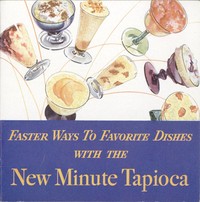
The catalog record for Faster Ways to Favorite Dishes With the New Minute Tapioca — Reading Notes provides practical reading context through 7,258 words, 32 min estimated reading time, and 1 detected text section.
The text analysis averages about 15.8 words per sentence, while the detected sections provide another way to judge how the source is divided.
Project Gutenberg metadata also associates the work with “Cooking, American,” connecting these edition facts with the source record’s subject description.
Explore this collection
These alternatives are selected using recorded categories and estimated reading time.
About 31 minutes
Historical Cookbooks
6,996 recorded words. 1 minutes difference from this book's estimate.
View Gutenberg source #70259About 30 minutes
Historical Cookbooks
6,722 recorded words. 2 minutes difference from this book's estimate.
View Gutenberg source #65562About 37 minutes
Historical Cookbooks
8,337 recorded words. 5 minutes difference from this book's estimate.
View Gutenberg source #65327Search stored excerpts and compare books → Choose by your preferences →
Choices use stored catalog measurements. Estimates vary with reading speed. A shared category is a catalog label, not a claim that two books have the same argument or literary quality.
Search reads excerpt text stored with this catalog and links to its associated Gutenberg record. The connection is stored in the site database; this tool does not recheck that every excerpt is word-for-word identical to that external record. Excerpt search does not cover every chapter and does not verify historical publication dates.
Catalog snapshot checked: 2026-09-26. Coverage: 91 public books, 91 available source excerpts.
Calculated from edition completeness, EPUB availability, text structure and catalogue metadata. Not a user rating.
Total of 100 points, scaled to a 2.5-5.0 range. Editions with an empty description or a missing EPUB file are not scored.
Public-domain source text
The source text is kept in the dedicated reader, separate from this catalogue record and its commentary.
The 1934 pamphlet Faster Ways to Favorite Dishes With the New Minute Tapioca opens with exclamatory promotional copy: “HEARD THE ‘GLAD NEWS’ ABOUT THE NEW MINUTE TAPIOCA?” The text immediately contrasts the old and new product, claiming the new version cooks in five minutes instead of fifteen and produces desserts that are “lighter, more delicate.” This hyperbolic register—promising cream puddings “as creamy as a Bavarian, as rich as a custard, as light as a whip”—sets a tone of enthusiastic salesmanship that pervades the booklet.
The booklet’s language is relentlessly optimistic. Phrases like “glad news,” “tempting Minute Tapioca desserts,” and “real honest-to-goodness home-made nourishment” frame the product as both a convenience and a wholesome necessity. The claim that the new tapioca “cooks in 5 minutes, after the liquid scalds, instead of 15” is repeated in several recipes, reinforcing the central selling point of time saved. The text also emphasizes reduced labor: “quicker, easier, and made with fewer dishes.” This focus on efficiency aligns with 1930s domestic marketing that targeted homemakers seeking modern shortcuts without sacrificing quality.
Each recipe follows a consistent format: ingredient list, then numbered steps. The instructions are precise about timing and technique—for example, “Place over rapidly boiling water, bring to scalding point (allow 5 to 7 minutes), and cook 5 minutes, stirring frequently.” The phrase “mixture thickens as it cools” appears repeatedly, educating the cook about tapioca’s behavior. A notable feature is the claim that Minute Tapioca acts as a “precision ingredient,” giving “just the desired texture or appearance—and a real margin of safety—to a lot of favorite but often troublesome dishes from soup to pie.” This positions tapioca not merely as a dessert starch but as a functional additive for stability.
While the booklet begins with cream puddings and fruit tapiocas, it devotes significant space to savory recipes. Lamb Casserole, Ramekin of Salmon, Chicken Croquettes, Savory Meat Loaf, and Ham Loaf all incorporate Minute Tapioca as a binder. The meat loaf recipes specify that the tapioca helps the loaves “keep their shape, yet are moist.” The instructions for Chicken Croquettes include chilling the mixture before shaping, then frying in deep fat at 390°F for one minute. These recipes demonstrate the manufacturer’s effort to expand tapioca’s use beyond sweet dishes, appealing to cooks who might otherwise reserve it for pudding.
The language borrows from early twentieth-century domestic science: measurements are “level,” temperatures are given in Fahrenheit, and techniques like scalding and folding are explained. Brand names appear throughout—Log Cabin Syrup, Baker’s Coconut—tying the recipes to other General Foods products. The Vanilla Ice Cream recipe, for instance, suggests reducing vanilla and folding in “1 cup Baker’s Coconut.” This cross-promotion is subtle but consistent. The overall effect is a hybrid of cookbook and advertisement, where the authority of precise instructions supports the commercial message that Minute Tapioca is an indispensable pantry staple.
Readers should approach this booklet as a period marketing artifact as much as a recipe collection. The recipes are functional, but the hyperbolic claims and brand cross-promotion reveal the commercial context of 1934. The emphasis on speed and ease reflects broader shifts in American home cooking during the interwar years. For modern cooks, the recipes offer a window into historical techniques and ingredient uses, though the tapioca’s role as a “precision ingredient” may require adaptation to contemporary kitchens.
Years shelving cookbooks taught me that Faster Ways to Favorite Dishes shared a quiet kinship with Practical vegetarian cookery — Edition Insights: both spoke of thrift and patience, coaxing humble staples into nourishment. Neither shouted; they simply trusted a careful hand. That 1934 tapioca pamphlet felt like a friend murmuring shortcuts, while the vegetarian volume whispered similarly about roots and lentils, each believing a modest meal could hold the whole afternoon’s comfort.
Use these questions to collect your thoughts before moving on.