About 27 minutes
Chinese recipes — Story, Setting & Ideas
Recipes
6,036 recorded words. 1 minutes difference from this book's estimate.
View Gutenberg source #76573
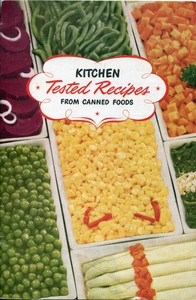
For Kitchen Tested Recipes from Canned Foods — Key Ideas to Explore, the stored edition analysis reports 6,218 words, 28 min estimated reading time, and 1 detected text section.
The text analysis averages about 15.9 words per sentence, while the detected sections provide another way to judge how the source is divided.
Project Gutenberg metadata also associates the work with “Canned foods,” connecting these edition facts with the source record’s subject description.
Explore this collection
These alternatives are selected using recorded categories and estimated reading time.
About 27 minutes
Recipes
6,036 recorded words. 1 minutes difference from this book's estimate.
View Gutenberg source #76573About 23 minutes
Recipes
5,221 recorded words. 5 minutes difference from this book's estimate.
View Gutenberg source #45838About 33 minutes
Recipes
7,539 recorded words. 5 minutes difference from this book's estimate.
View Gutenberg source #67651Search stored excerpts and compare books → Choose by your preferences →
Choices use stored catalog measurements. Estimates vary with reading speed. A shared category is a catalog label, not a claim that two books have the same argument or literary quality.
Search reads excerpt text stored with this catalog and links to its associated Gutenberg record. The connection is stored in the site database; this tool does not recheck that every excerpt is word-for-word identical to that external record. Excerpt search does not cover every chapter and does not verify historical publication dates.
Catalog snapshot checked: 2026-09-26. Coverage: 91 public books, 91 available source excerpts.
Calculated from edition completeness, EPUB availability, text structure and catalogue metadata. Not a user rating.
Total of 100 points, scaled to a 2.5-5.0 range. Editions with an empty description or a missing EPUB file are not scored.
Public-domain source text
The source text is kept in the dedicated reader, separate from this catalogue record and its commentary.
The booklet opens not with a recipe but with a guide to common can sizes, listing exact fluid ounces and cup equivalents for No. ¼ Flat through No. 10 cans. This front matter establishes a tone of precision and authority, positioning the Home Economics Department as a reliable intermediary between the factory and the kitchen. The recipes that follow adopt a brisk, imperative voice: “Mix soups together,” “Sauté bread cubes,” “Cook raisins in boiling water.” Instructions are concise, often omitting subjects, and rely on numbered steps or short paragraphs. Yet the pacing varies: some recipes, like Purée Mongole, are dispatched in a single dense paragraph, while others, such as Fruit Custard, unfold over several sentences with separate handling of meringue and custard. This variation suggests an awareness that different dishes require different levels of explanation.
The dominant grammatical mood is the imperative, addressed to an implied “you” who is assumed to be a home cook. Verbs are direct: “Heat thoroughly,” “Add chilled lemon,” “Pour mixture into pastry shell.” There is no hedging or optional language—every action is presented as necessary. This voice mirrors the efficiency promised by canned foods themselves: no waste, no guesswork. The recipes rarely explain why a step matters; they simply state what to do. For instance, in the Soft Custard Sauce, the instruction “cook over hot water, stirring constantly, until custard coats spoon” gives a clear visual cue without elaborating on the science of egg coagulation. The language assumes a cook who can recognize that coating-the-spoon moment. This trust in the reader’s practical knowledge is consistent throughout, though it occasionally falters—the Pumpkin Whip recipe, for example, includes the oddly specific note to beat egg whites “until stiff” and then “gradually add sugar,” a sequence any experienced baker would know, but spelled out nonetheless.
Recipe length varies considerably, and this variation functions as an implicit signal of complexity. Short recipes like Purée Mongole (four lines) or Deviled Sardines (not shown but likely brief) can be scanned quickly; longer ones like Cranberry and Raisin Pie (a full paragraph plus baking time) demand more attention. The booklet uses paragraph breaks sparingly, often packing multiple steps into a single block. For example, the Corn and Tomato Chowder recipe begins with a list of ingredients, then a single sentence: “Cut bacon i[...]” (the excerpt cuts off, but the pattern is clear). This dense layout contrasts with the Fruit Custard recipe, which separates the custard base, fruit preparation, and meringue into distinct sentences, creating a slower, more deliberate rhythm. The effect is that the reader’s eye moves at different speeds depending on the dish, mirroring the actual pace of cooking—a quick soup versus a layered dessert. The absence of numbered steps in most recipes further compresses the text, forcing the cook to parse the sequence from the prose itself.
Several recurring details reveal the booklet’s dual purpose: to instruct and to promote canned foods. Nearly every recipe includes a garnish suggestion—“Thinly sliced celery,” “slivered almonds or chocolate bar,” “mint, pineapple sticks and cherries.” These garnishes are not essential to the dish but add a note of hospitality, aligning the home cook with the ideal of attractive, nutritious meals stated in the introduction. Yields are consistently given, often in two formats (“4 to 6 Servings” or “Approximately 30 (6-oz.) servings—45 (½ cup) servings”), which reflects a corporate precision aimed at minimizing waste. The brand voice emerges most clearly in the introductory paragraph, which uses the first-person plural (“we”) and the proprietary term “Canco Testing Kitchen.” This institutional “we” reappears nowhere in the recipes themselves, which remain impersonal. The contrast suggests that the recipes are meant to feel neutral and universal, while the framing material asserts the company’s expertise. The final page, with its address and printing code, reinforces that this is a commercial document, not a community cookbook.
Readers approaching this booklet should pay attention to the interplay between brevity and detail. The shortest recipes may assume prior knowledge, while longer ones offer more scaffolding. The can-size guide at the front is essential for interpreting ingredient quantities, especially for modern cooks unfamiliar with No. 2½ or No. 3 cylinder cans. The language is a product of its time—efficient, confident, and slightly promotional—but the recipes themselves are functional and, in many cases, adaptable. Treat the booklet as a historical artifact of home-economics instruction, not as a comprehensive cooking manual.
There’s something touching about those old canning booklets, their tidy absolutes about sizes and timing. I keep thinking how different the quiet confidence of that era’s kitchen advice feels from the gentle hesitations in the era’s vegetarian manuals, like Substitutes for Flesh Foods: Vegetarian Cook Book — Background and Themes, where every substitution reads as a small hope rather than a rule. Both speak to a longing for order at home, but only one admits the longing openly.
Capture what you thought, learned, and would like to remember.